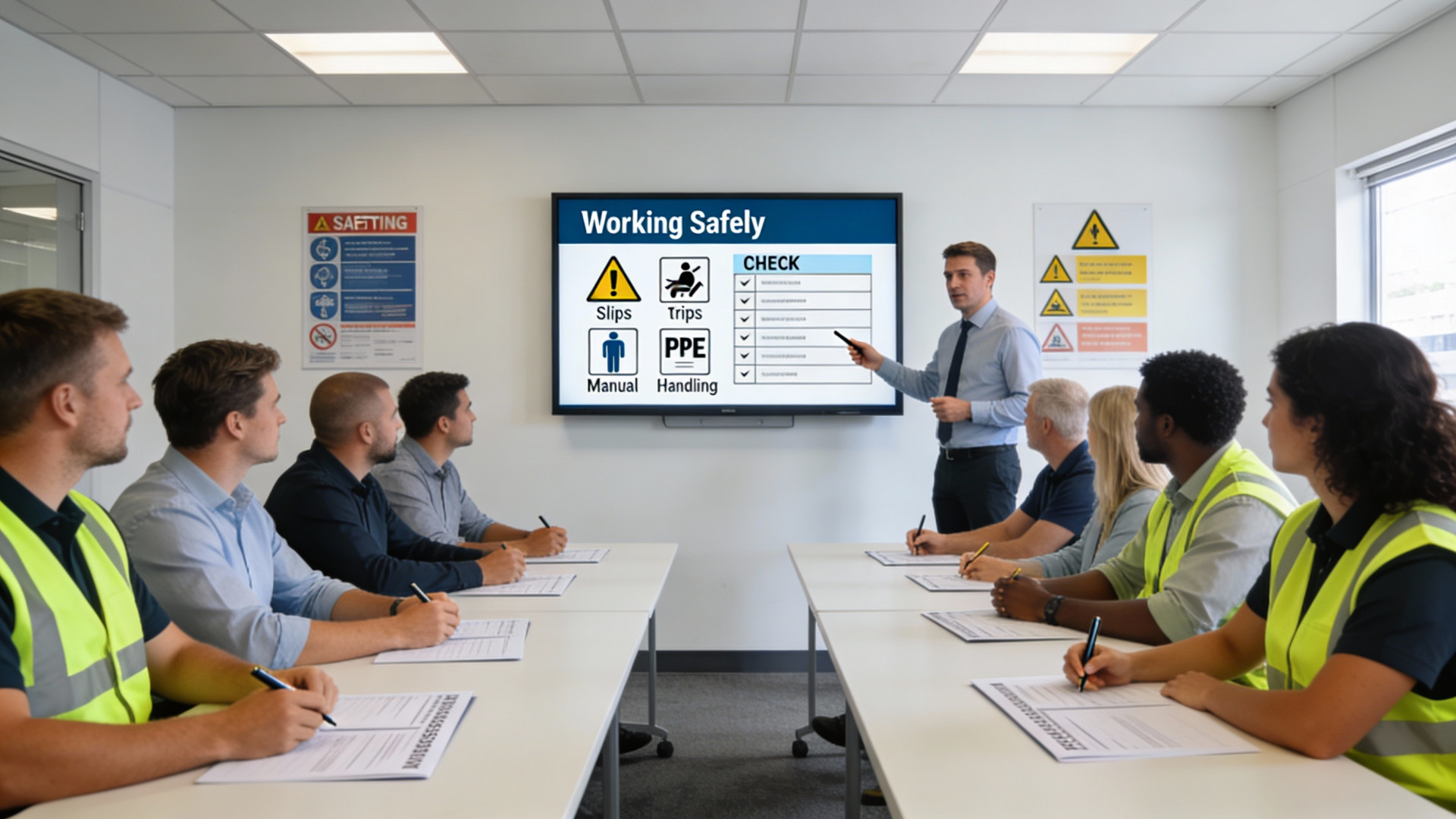
IOSH Working Safely
The IOSH Working Safely course is an entry-level health and safety awareness programme designed for employees at all levels. It provides a practical understanding of workplace hazards, responsibilities, and safe working practices across any industry.
Delivered by Alternative Training, this course introduces the essentials of health and safety, focusing on why safety matters and how individual actions impact colleagues and the wider organisation. The course supports employers in meeting legal training obligations and promoting a positive safety culture.
Who Is This Course For?
This course is suitable for:
Employees at all levels
Office and site-based workers
New starters and contractors
Employers wishing to embed a safety culture and demonstrate compliance
No previous health and safety training is required.
What You Will Learn
By completing this course, learners will gain knowledge of:
Why working safely is important and everyone’s responsibilities for health, safety, and wellbeing
Key safety and health terminology, including the difference between hazards, risks, and types of harm
Common workplace hazards, such as slips, trips, fire, vehicles, chemicals, manual handling, noise, and stress, along with appropriate control measures
How safety performance is managed and improved through safe systems of work, permits, inspections, reporting, and worker involvement
How personal behaviour and choices contribute to a safer working environment
Course Delivery & Assessment
Course format: Online or tutor-led classroom training
Duration: Typically 1 day or 5–6 hours online
Assessment: Multiple-choice knowledge test and practical hazard-spotting exercise
Certification: IOSH Working Safely Certificate
The IOSH Working Safely certificate is widely recognised as an essential health and safety qualification for employees. It provides a foundation for progression to more advanced courses, such as IOSH Managing Safely or sector-specific training.
Benefits & Progression
Completing this course helps learners work more confidently and responsibly, reducing accidents and near misses. For employers, it supports legal compliance, improves safety culture, and can reduce the risk of fines, enforcement action, and workplace disruption.
Learners can use this qualification as a stepping stone to advanced health and safety programmes or role-specific certifications.
Zapisz się na to szkolenie